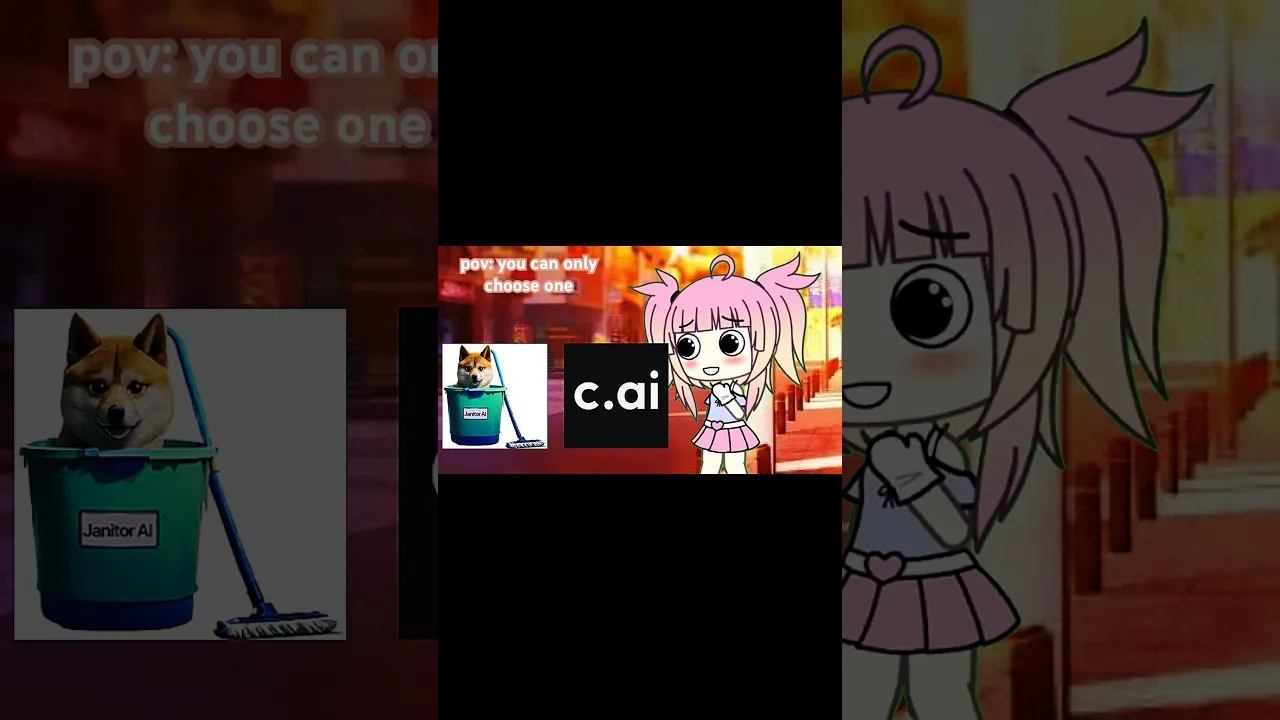
Character chat apps share a premise — talk with invented people — and differ in almost everything else: where the characters come from, which models power them, how much control the user holds, and what the community feels like. Janitor AI on your phone represents the open, community-library, bring-your-own-model end of the spectrum, and this guide compares the approaches fairly so you can choose by fit rather than by fame.
You will find the three broad models of character platform, what each optimises, what each sacrifices, and a matching method based on the kind of user you actually are.
No verdict is universal here, and any source offering one is selling something. Fit is personal, and the categories are stable enough to reason about even as individual apps change.
The Three Models of Platform
Community-library platforms host characters created by users, in vast, uneven, wonderful profusion, and often let users connect different models. Curated platforms offer a smaller shelf of polished, official characters with everything managed for you. Companion apps focus on one persistent partner — a friend or confidant — rather than a cast.
Janitor sits in the first family, with its particular accent on user creation and model flexibility. Knowing the family tells you the experience before you download anything: abundance and variance on one side, polish and limits on the other.
Characters: Abundance Versus Curation
A community library will contain your exact niche — and a hundred rough drafts beside it. Discovery skill becomes the price of admission, which is why this library teaches search and audition as crafts. A curated shelf removes the search problem and the niche with it.
Neither is superior in the abstract. Readers who love browsing used-book shops thrive in libraries; readers who want the season's best novel handed to them thrive in curation. Be honest about which reader you are. The discovery method for this platform lives in finding characters in Janitor AI, and its necessity is the library model's honest price tag.
Model Flexibility: Power and Homework
Platforms that let you choose or supply the model hand you real power: better writing, larger memory, different costs. They also hand you the homework — keys, endpoints, quotas — that managed platforms hide. The settings explainers in this library exist because that homework is real, and it is not for everyone.
Managed platforms choose the model for you and optimise for it; the writing is consistent, the memory is what it is, and your evenings contain zero configuration. Users who find settings pages relaxing and users who find them repellent should choose different platforms, and both are right.
Creation: Who Gets to Build
Open platforms turn users into authors, with all the growth that implies: your character can exist tonight, strangers can love it by Friday, and your craft improves in public. Managed platforms restrict creation to templates or nothing, trading that growth for safety and tone control.
If you suspect a maker is hiding in you, the open model's invitation matters more than any feature list. The creation guide in this library — creating your first character in Janitor AI — is the first step of a road the closed platforms simply do not have.
Community and Safety Cultures
Open communities are livelier, stranger, and more in need of the block button; curated ones are calmer by construction. Both publish rules; the difference is how much of the weather those rules must handle, and how often you will personally meet the weather.
Choose with your temperament in view. A user who enjoys a frontier town should not move to a gated village and complain about the quiet, nor the reverse.
Cost Shapes
Open, model-flexible platforms can be free at the platform layer with costs living at the model layer if you supply premium access — a structure that rewards the technically comfortable. Managed platforms bundle everything into subscriptions whose simplicity is itself a feature worth paying for.
Count total cost honestly, including your time's value in configuration and discovery. The cheapest platform is the one whose costs are the kind you enjoy paying.
The Matching Verdict
Choose the open library — this app — if you want abundance, creation, and control, and you accept discovery and settings as the price. Choose curation if you want polish without homework. Choose a companion if what you seek is one relationship rather than a cast.
Many users keep two: a managed app for effortless evenings and this one for the projects, characters, and control that only openness offers. The platforms are complements wearing rivals' clothing, like most tools that survive.
Fit first: library or shelf, flexible or managed, cast or companion. Answer those three and the download chooses itself, whatever the charts say this month.
And if you choose the library, welcome to the stacks. Bring your audition habits; the collection rewards them.
Let your choice be revisitable. Platforms evolve, your projects change, and the user who chose the library for its creation tools may one day need a companion's simplicity for a season. Loyalty to your own fit is the only loyalty this decision asks for.
Prices, models, and catalogues will all change within the year; the questions in this guide will not. Keep them, and every future platform announcement — including this app's own — can be evaluated in an afternoon instead of a month of drifting between trials.